Is AI Weakening Marketing or Exposing Weak Marketing Strategy?

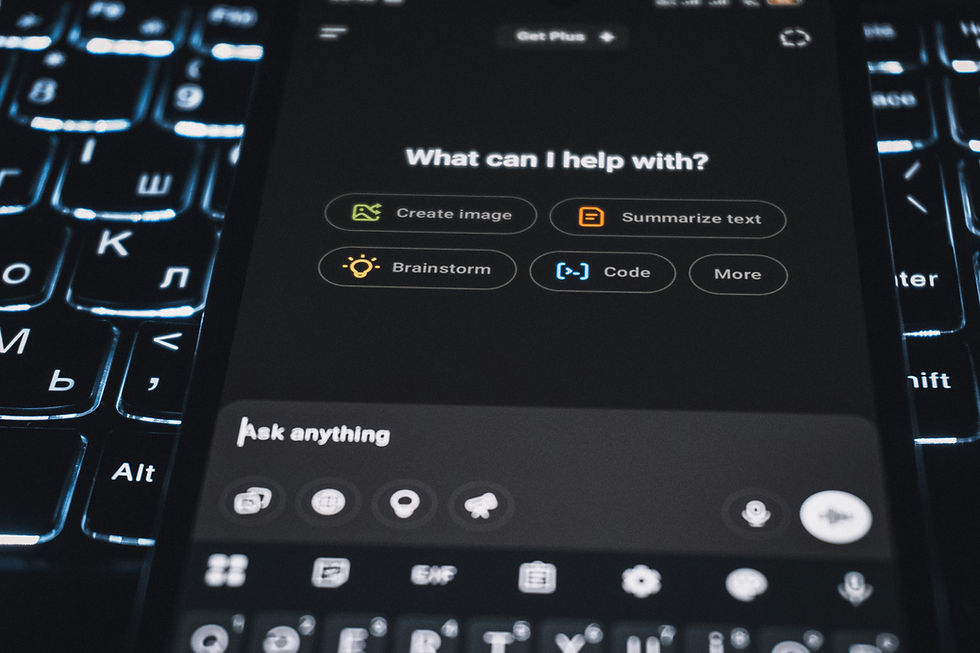
Artificial intelligence is rapidly changing the marketing landscape. For smaller and owner-managed businesses in particular, AI has democratised access to tools and capabilities that were once only available to larger organisations with sizeable marketing budgets and agency support.
Today, businesses can generate content, graphics, advertising copy and even campaign ideas in minutes. On the surface, this creates a more level playing field. Smaller firms can suddenly produce marketing output at a scale previously associated with larger competitors.
However, as AI-generated marketing becomes more widespread, a growing question is emerging: is AI making marketing less effective?
The answer is more nuanced than many headlines suggest.
AI is not weakening good marketing. It is exposing poor marketing.
The reality is that many businesses never had strong differentiation, clear positioning or a defined tone of voice in the first place. AI has simply accelerated and amplified that weakness. When businesses rely too heavily on generic prompts and templated outputs, the result is often marketing that looks, sounds and feels identical to everyone else.
In many ways, AI has created a volume problem. Businesses can now produce more content than ever before, but audiences are simultaneously being bombarded with more messaging than they can realistically process. Competing for attention has become harder, not easier.
This is where some organisations begin to believe AI is damaging their brand or reducing marketing effectiveness. AI is often highlighting a lack of strategic clarity rather than causing it.
Marketing fundamentals still matter.
In fact, they arguably matter more now than ever before.
Businesses that succeed in an AI-driven marketing environment will be those with clear brand positioning, strong customer understanding and genuine points of difference. Tone of voice, messaging consistency and audience relevance can no longer be optional. They need to be embedded across all communications and used as a framework against which AI-generated content is assessed.
AI should support marketing strategy, not replace it.
That distinction is critical.
There is also an irony emerging within the industry itself. Some agencies are increasingly pushing back against client use of AI, often arguing that AI-generated content lacks originality or authenticity. In many cases, they are right. However, the reality is that AI is here to stay and businesses that refuse to embrace it risk falling behind competitors who are using it to improve efficiency, responsiveness and content production.
The challenge moving forward is not whether businesses should use AI. It is whether they use it intelligently.
Used properly, AI can enhance creativity, improve productivity and help businesses communicate more consistently. Used poorly, it simply accelerates blandness.
Ultimately, AI is not killing marketing.
It is forcing businesses to return to what effective marketing should always have been about: knowing your audience, understanding your proposition and communicating with clarity, relevance and distinction.
In many respects, it is not a new era of marketing at all.
It is simply a return to the basics — executed at speed.
Need Support Developing a Clearer Marketing Strategy in an AI-Driven World?
At Pinchbeck Marketing & Advisory, we support businesses, professional firms and organisations with strategic marketing, positioning, messaging development, SEO, AEO and GEO optimisation, customer journey development and commercial growth strategy.
As AI continues to reshape marketing and content creation, businesses increasingly need more than just output and visibility. They need clear positioning, strong differentiation, effective customer communication and marketing activity aligned to genuine commercial objectives.
Our work helps organisations:
strengthen brand positioning,
improve messaging consistency,
refine tone of voice,
develop purposeful content strategies,
improve customer journeys and conversion,
and ensure marketing activity remains commercially focused and strategically differentiated in an increasingly crowded digital landscape.
Learn more about our services
To arrange an exploratory discussion contact us
Frequently Asked Questions
Is AI making marketing less effective?
AI is not necessarily weakening marketing itself, but it is exposing weaknesses in businesses that lack clear positioning, differentiation and strategic clarity. Poorly directed AI-generated content can quickly become generic and ineffective.
How is AI changing marketing for smaller businesses?
AI has made tools such as content creation, copywriting, image generation and campaign planning more accessible and affordable for smaller and owner-managed businesses, helping level the playing field with larger organisations.
Why does AI-generated marketing often sound similar?
Many businesses rely on generic prompts and templated outputs without strong brand positioning or tone of voice guidelines. This can result in content that feels repetitive, generic and indistinguishable from competitors.
Does marketing strategy still matter in an AI-driven world?
Yes — arguably more than ever. Businesses need clear positioning, audience understanding, messaging consistency and differentiation to ensure AI-generated content aligns with commercial objectives and brand identity.
Should businesses avoid using AI in marketing?
No. AI can improve productivity, efficiency and content production when used properly. The key challenge is using AI strategically rather than relying on it to replace marketing thinking and decision-making.
What are the risks of relying too heavily on AI-generated content?
Over-reliance on AI can lead to bland messaging, loss of originality, inconsistent tone of voice and weaker customer engagement if businesses do not apply strategic oversight and human refinement.
How can businesses use AI more effectively in marketing?
Businesses should use AI to support and enhance marketing strategy rather than replace it. This includes combining AI tools with clear positioning, customer insight, tone of voice guidelines and strong commercial objectives.


Comments