Are You Ignoring Bing? Why It Matters More in the Age of AI

Updated: Sep 1

For many businesses, search engine optimisation has effectively meant one thing: Google.
Google Business Profile is claimed, Google Search Console is monitored and considerable time and money may be spent trying to improve Google rankings.
But what about Bing?
Microsoft's search engine has often been regarded as something of an also-ran. And if you simply look at overall search-engine market share, it is easy to understand why.
That may now be a mistake.
Bing is bigger than you might think
Google remains overwhelmingly dominant, particularly on mobile devices. However, Bing has a much more significant share of desktop search.
According to Statcounter, in July 2026 Bing accounted for around 10.8% of UK desktop searches. That means roughly one in ten searches conducted on a UK desktop computer is happening through Bing.
For businesses selling to other businesses, that is particularly interesting.
Think about where many owners, managers, professional advisers and employees spend their working day: on Windows PCs, using Microsoft 365, Edge, Outlook, Teams and an increasingly wide range of Microsoft applications.
The audience you are trying to reach may therefore be more exposed to Microsoft's search ecosystem than headline search-market statistics initially suggest.
Then came AI
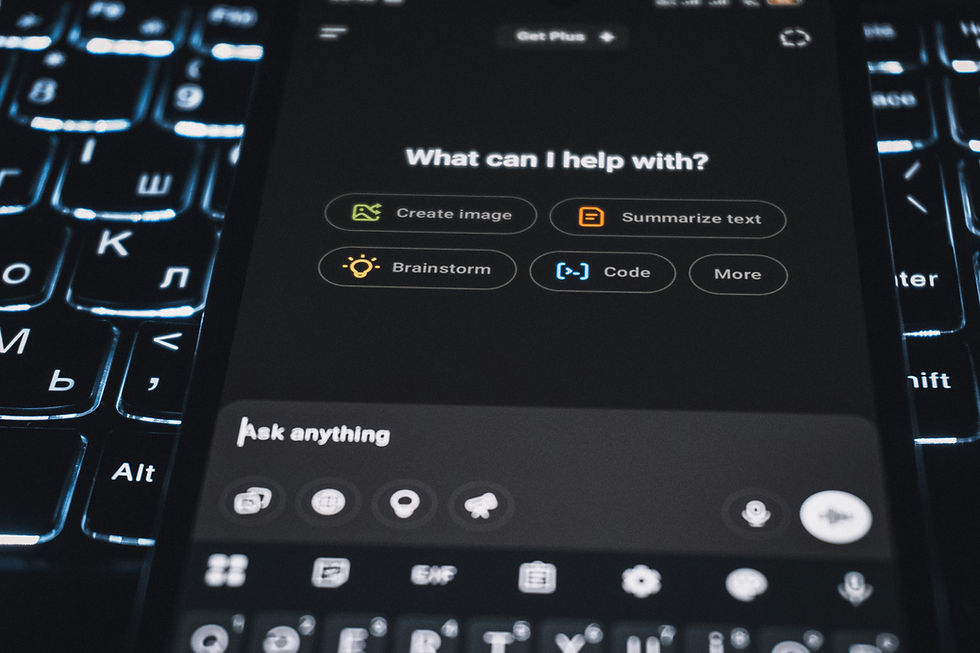
There is an even more important reason to reconsider Bing: Microsoft Copilot.
Search itself is changing.
Instead of always opening a search engine, entering several words and working through a page of links, people are increasingly asking an AI assistant a question:
Who can help us develop our marketing strategy?
Find an employment lawyer who specialises in advising employers.
Which accountants can help a UK company establish a business in Germany?
Who provides equestrian arena equipment in the UK?
The answer may increasingly be delivered by an AI platform rather than a conventional list of search results.
Microsoft confirms that when web search is enabled within Copilot, Copilot creates a search query from the user's request and sends it to Bing. Bing's results are then used to help Copilot produce a current, web-grounded response.
That changes the way we should think about Bing.
It is no longer sensible to view it simply as a smaller alternative to Google. Bing is also part of the infrastructure Microsoft uses to help its AI products find and interpret information from the public web.
From SEO to being discoverable by machines
This illustrates a much wider change taking place in marketing.
Traditionally, the objective of SEO was relatively straightforward:
Can someone find my website when they search for something I provide?
Increasingly we need to ask a second question:
Can a search engine or AI platform understand who we are, what we do, where we operate and why we might be relevant to someone's question?
This is where SEO increasingly overlaps with AEO – Answer Engine Optimisation – and GEO – Generative Engine Optimisation.
Businesses need to create a clear and consistent digital footprint.
Your website, Google Business Profile, Bing listing, LinkedIn page and other credible references to your organisation should reinforce broadly the same information.
Who are you?
What do you do?
Who do you help?
Where do you operate?
What are you particularly experienced or expert in?
The easier those questions are for machines as well as people to understand, the stronger the foundations for future discoverability.
So should you list your business on Bing?
In most cases, yes.
Bing Places for Business is free, and Microsoft allows businesses to claim and manage the information displayed about them in Bing Maps and Bing search experiences.
At a minimum you should ensure your business has:
a claimed and accurate Bing Places listing;
the correct business category;
a clear description of the business;
your main products or services;
accurate location or service-area information;
your website and contact details;
your logo and appropriate images.
You should also consider setting up Bing Webmaster Tools, just as many businesses already use Google Search Console.
None of this means abandoning Google. Far from it.
Google will continue to be an essential part of most businesses' search strategy.
The point is that concentrating exclusively on Google increasingly looks unnecessarily narrow.
Don't optimise for an algorithm – establish your identity
There is also a danger that businesses respond to AI search by chasing another collection of tricks and techniques.
A better approach is much simpler.
Concentrate on creating a strong, consistent and authoritative presence online.
Make it very easy to understand what your business does. Develop useful website content that demonstrates your expertise. Maintain accurate business profiles. Ensure other credible websites refer to your organisation. Publish insights that answer the questions prospective clients actually ask.
In other words, don't simply try to convince an algorithm that you are relevant.
Give search engines and AI platforms enough clear and credible information to understand why you are relevant.
For years, many businesses could probably afford to overlook Bing.
With Microsoft Copilot increasingly drawing on Bing search to ground information from the web, I am not sure that remains such a good idea.
And when establishing a Bing presence costs little more than some time, it could be one of the easier marketing jobs currently sitting on your to-do list.
Is your business as easy to find and understand online as it should be?
Pinchbeck Marketing & Advisory helps businesses review their marketing, positioning and digital presence, identifying practical opportunities to improve visibility, reach and marketing effectiveness.
If you would like an independent view of how your business is presenting itself to customers, search engines and the emerging generation of AI tools, please get in touch.
Frequently Asked Questions
Is Bing still relevant for businesses?
Yes. Google remains dominant, but Bing still accounts for a meaningful share of desktop search, particularly among users within the Microsoft ecosystem. For B2B businesses, where customers and decision-makers are often searching from workplace computers, Bing can be more important than its overall market share suggests.
Should I list my business on Bing?
For most businesses, yes. Bing Places for Business is free and allows you to provide Microsoft with accurate information about your business, including your website, contact details, services, location and business category. It is a simple way to strengthen your wider online presence.
Does Microsoft Copilot use Bing?
Yes. When web search is enabled, Microsoft Copilot can use Bing to retrieve current information from the public web and help ground its responses. This makes Bing increasingly relevant not only for traditional search, but also for AI-powered discovery.
Will being listed on Bing help my business appear in AI answers?
There is no guarantee that a Bing listing will result in your business being mentioned by an AI platform. However, providing clear, accurate and consistent information helps search engines and AI systems better understand who you are, what you do and where you operate.
What are AEO and GEO?
AEO, or Answer Engine Optimisation, is about making information easier for search and answer engines to understand and use when responding to questions. GEO, or Generative Engine Optimisation, focuses on improving how easily a business, brand or its content can be understood and surfaced by generative AI platforms. Both complement traditional SEO.
Do I need to choose between Google and Bing?
No. This is not an either/or decision. Google should remain an important part of most businesses' search strategy, but there is little reason to ignore Bing when setting up a listing and submitting a website are relatively straightforward. The wider objective is to make your business easy to find, easy to understand and consistently represented wherever customers, search engines and AI platforms may encounter it.


Comments